
News
Two Emerging Exciting Green Projects in North Dakota and Minnesota
Sustainable Aviation Fuel is essential to the future of the aerospace industry, as it offers the opportunity to continue to build that industry with relatively few changes required in their entire regime – which one would have to agree is indeed very complex. The key difference here is that SAF fuel generally no longer comes from the petroleum industry but rather from the biomass industry.
EnviroTrec Stories
Two Emerging Exciting Green Projects in North Dakota and Minnesota
Sustainable Aviation Fuel is essential to the future of the aerospace industry, as it offers the opportunity to continue to build that industry with relatively few changes required in their entire regime – which one would have to agree is indeed very complex. The key difference here is that SAF fuel generally no longer comes from the petroleum industry but rather from the biomass industry.
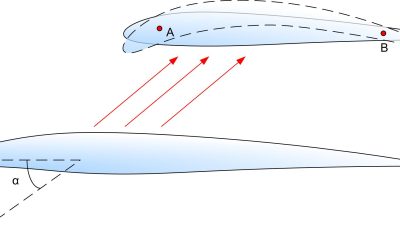
Variable Camber with New Control Surfaces
Variable-camber control of the wing for drag reduction throughout the flight mission using existing control surfaces can provide the ability to realize modest operational savings. Variable camber is considered ideal for future aircraft because the concept calls for a complete redesign of the wing from largely a static piece to an ever-adjusting aircraft component.
Capstone 2022: An All-Terrain Intermediate Frame Transport and Storage System
EnviroTREC supported a University of Manitoba - Mech 4680 Engineering Design project for 2022. The design challenge given to students this year was...

MDS selected by Airbus as a partner for hydrogen powered ZEROe propulsion system testing
MDS is thrilled to have been selected as a partner on the Airbus ZEROe fuel cell engine demonstrator supporting Airbus’ ambition to develop the world’s first zero-emission commercial aircraft by 2035
Industry Stories
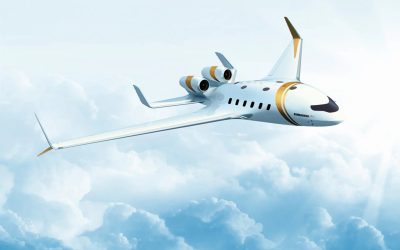
IATA Technology Roadmap 2023, Grist for the Mill, Part-6
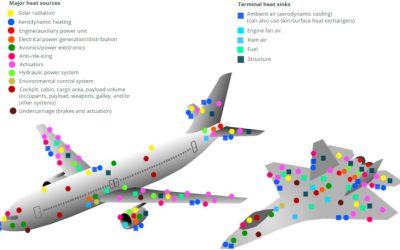
The price points for the BWB demonstrators are higher, while revenues are not yet evident. Two projects are part of this story. The first is the US government’s support for a demonstrator project for the Blended Wing Body. The second project is the EcoJet Business Jet, being proposed by Bombardier.
IATA Technology Roadmap 2023, Grist for the Mill, Part-5
An example of Multi-Functional Structures would be antennas embedded in the fuselage. These items would, for example, reduce the weight of both items by being combined meaningfully during manufacture. One item provides structural support, while the other supports systems integration.
IATA Technology Roadmap 2023, Grist for the Mill, Part-4
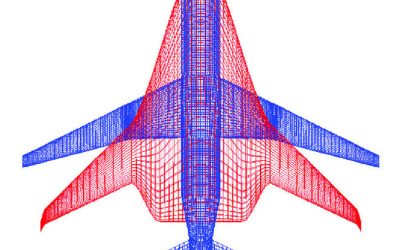
The hybrid or blended wing body demonstrator represents a new approach to designing aircraft. Traditional models of aircraft design have used a tube and wing layout. That design is now being considered for replacement by the hybrid or the blended wing body.
IATA Technology Roadmap 2023, Grist for the Mill, Part-3
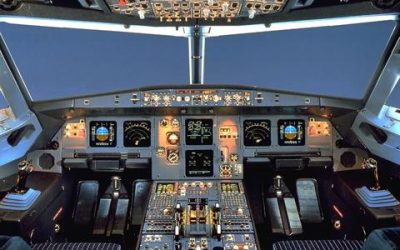
An important point about FBW is that the loss of all flight control computers immediately renders the aircraft uncontrollable. Backups are necessary to compensate for such events. Most fly-by-wire systems incorporate redundant computers. Furthermore, mechanical and hydraulic backups sometimes provide the needed redundancy.
IATA Technology Roadmap 2023, Grist for the Mill, Part-2
Three approaches for reducing the in-flight energy requirements of aircraft are discussed. These ideas consider deploying composites, creating higher gas turbine power densities, and building gas turbine engines with low NOx combustion gasses.

IATA Net Zero Technology Roadmap: Grist for the Mill, Part-1
The overall impact of energy demand for aviation services is that energy requirements will outpace the in-flight features that are under development or are yet to be introduced. The technological developments of in-flight energy reductions are “grist for the mill,” as later improvements will call upon the lessons learned and configurations achieved to develop further novel configurations.

A Sustainable Aviation Fuel Project Making Progress in Manitoba
Portage la Prairie finds itself in a nexus of agricultural opportunities. The aerospace industry is trying hard to manage carbon emissions with a growing passenger demand. Part of that industry’s mitigation efforts are focused on better gas turbine engines or improved aircraft designs. These improvements, however, only reduce carbon emissions to a limited extent. A more holistic and long-term view needs to be taken.
Variable Camber with New Control Surfaces
Variable-camber control of the wing for drag reduction throughout the flight mission using existing control surfaces can provide the ability to realize modest operational savings. Variable camber is considered ideal for future aircraft because the concept calls for a complete redesign of the wing from largely a static piece to an ever-adjusting aircraft component.
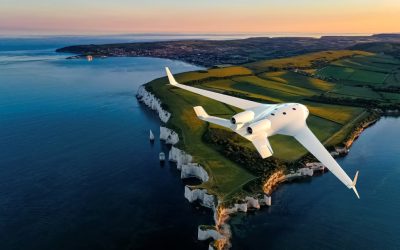
Bombardier working on the Blended Wing EcoJet to reduce Aviation Emissions
Bombardier, the renowned Canadian aerospace manufacturer, is spearheading a revolution with its groundbreaking creation: the Blended Wing EcoJet. This visionary concept can potentially redefine the future landscape of private aviation on multiple fronts